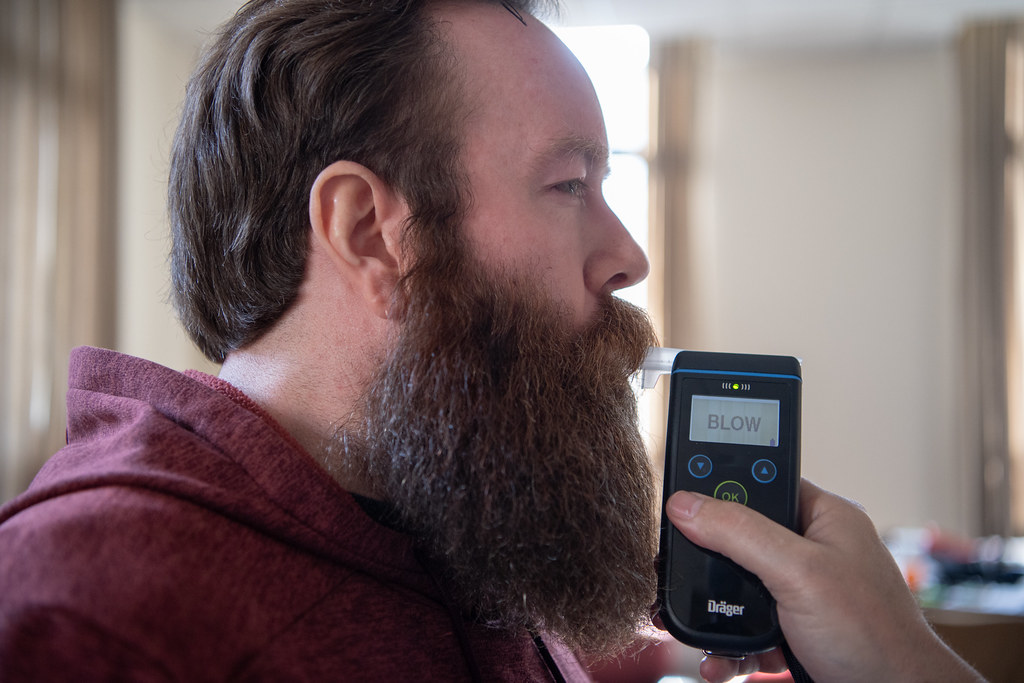
Impaired driving is the only crime where an investigation ceases once minimal evidence is obtained. This results in many multiple substance-impaired drivers going undetected. Currently, many state policies and protocols (Stop Limit Testing) prevent drug testing when an impaired driver has a blood alcohol concentration (BAC) level at or above a set limit, for example BAC 0.08, where the driver is only charged with DUI-alcohol. Drug use is usually only investigated when alcohol is ruled out as the cause of impairment or the impairment does not correspond with the driver’s BAC level.
Data shows the need to test for both drugs and alcohol to better identify these dangerous drivers and ensure they are screened, assessed, sentenced, and treated in a way that positions them for rehabilitation and reduces future DUIs.
Research from the National Highway Traffic Safety Administration (NHTSA) found that 55.8% of injured or killed roadway users at study trauma centers and medical examiners offices tested positive for one or more drugs including alcohol. The most prevalent drug category detected was cannabinoids (active THC) with 25.1% positive, followed by alcohol (23.1%), stimulants (10.8%), and opioids (9.3%). Overall, 19.9% of roadway users tested positive for two or more categories of drugs (Berning 2022).
A study conducted by the NTSB found that approximately half of the individuals arrested for impaired driving in their research tested positive for two or more categories of impairing substances. Alcohol was the most commonly detected drug followed by cannabis (NTSB 20221).
Research shows many drugs can be missed if toxicology testing stops after alcohol is detected over the per se limit or higher (i.e., stop testing). NTSB research found that 43% of drivers arrested for impaired driving in Orange County, California above the per se limit had one or more additional drugs in their system (NTSB, Alcohol, Other Drug, and Multiple Drug Use Among Drivers, 2022).
Why is Better Detection Critically Important?
Failure to identify multiple substance and drug-impaired drivers can lead to negative outcomes:
Lack of testing leads to under-reporting, limits overall understanding of the issue and prevents informed decision-making regarding policy and resource allocation.
Failure to identify drug use at the time of arrest hinders the court’s ability to effectively dispose of cases and craft sentences tailored to offenders’ risk and needs.
Unless drug use is identified at the outset of the case, offenders are unlikely to be subject to any drug monitoring, screening/assessment and/or treatment, creating a missed opportunity to intervene and make informed offender supervision and treatment decisions that would reduce repeat DUIs.
Solutions for Improving Detection Specialized Training
A comprehensive approach should be implemented to identify drug and multiple substance impaired drivers, promote accountability and behavior change including:
Most law enforcement officers are trained to identify alcohol-impaired drivers, but many do not receive specialized training to identify the signs and symptoms of drug or multiple substance impairment.
ARIDE training is the bridge between SFST and Drug Recognition Evaluation (DRE) training. The greater the number of ARIDE-trained officers, the more likely that drug and polysubstance-impaired drivers will be identified and DREs will be called upon to perform drug evaluations. Advanced Roadside Impaired Driving Enforcement Participant Manual.
A complete investigation for drug-impaired driving requires an evaluation by a drug recognition expert (DRE). The nation needs more drug recognition experts, especially in rural areas and smaller police and sheriff’s departments. This training requires 2 weeks of in-class instruction followed by a full week of field certification. DREs must be recertified every two years. Drug Evaluation and Classification Program, Advanced Roadside Impaired Driving Enforcement Resources
Drug-impaired driving cases require a blood draw for evidential purposes and the delay in obtaining the blood sample is a substantial challenge. Impairment from drug use can last for hours, but the body metabolizes drugs quickly and chemical evidence dissipates rapidly.
Electronic Search Warrants help officers quickly obtain a search warrant for blood to accurately determine BAC or toxicology results and streamline the arrest process. Other benefits of e-warrants include reduced workloads, fewer errors, stronger DUI cases, speedier case resolutions, fewer burdens on the system, reduced refusal rates, and public deterrence. Minnesota’s e-Charging platform reduced error rates from 30% to nearly zero and practitioners report increased ease in obtaining warrants. With an e-warrant system, submissions can be prepared in under 10 minutes and the review, approval, and return process can be completed in 15-20 minutes. Implementation recommendations and examples of robust systems can be found in our Guide to Implementing Electronic Warrants. Both the International Association of Chiefs of Police (IACP) and the National Sheriffs’ Association (NSA) have joint resolutions in support of the use of e-warrant systems.
One way to speed the process of blood collection is to train law enforcement officers as phlebotomists so they are fully trained to draw blood. Law enforcement phlebotomy saves time and money and alleviates the challenge of performing blood draws in hospitals. When suspects refuse BAC tests or when drug use is suspected, a certified medical professional must perform a blood draw. However, emergency department delays are common, and some medical facilities have policies limiting cooperation with law enforcement which can make it difficult to obtain the sample in a timely fashion. To address these issues and others (e.g., chain of custody, testimony, etc.), law enforcement agencies establish phlebotomy programs and certify officers to perform blood draws. Advantages of these programs are highlighted in the NHTSA Law Enforcement Phlebotomy Toolkit include: decreased time from traffic stop to blood sample collection; reduced costs ($40-100/draw); fewer case dismissals; reduced officer overtime pay; improved law enforcement testimony; potential for blood collection at the scene of vehicular homicide/vehicular assault cases prior to being transported to the hospital; and shorter processing times. Law enforcement phlebotomy began in 1995 when the Arizona Department of Public Safety (DPS) established this program to address concerns about high-BAC refusal rates. After the phlebotomy program was active, statewide refusal rates fell from 20% in 1995 to 6% in 2009. Today, more than 22 states have such phlebotomy programs in place.
Proof of a defendant’s positive alcohol and/or drug test is important for establishing guilt, but DUI blood samples may take months to process which can result in dismissed cases. Many states struggle with a backlog in forensic laboratories that can be in upwards of nine months. Another common concern is a lack of toxicologists available to provide courtroom testimony in complicated DUID cases. Labs need adequate staffing to address these issues. Also, new and advanced testing instrumentation is costly and requires new protocols, procedures, and training. States that wish to allocate highway safety or other grant funding to address any of these issues should be highly encouraged and allowed to do so.
Accurate testing will advance understanding of the drug-impaired driving (DUID) problem. Labs should establish/adopt minimum guidelines for toxicological investigations in traffic crashes and drug-impaired driving cases (i.e., drug panels, cut-off levels, and testing procedures) outlined in the Recommendations for toxicological investigation of drug-impaired driving and motor vehicle fatalities—2025 update. Lab uniformity is not required but a survey revealed 52% of labs questioned were in partial compliance and motivated to achieve full compliance with NSC recommendations (Logan et al., 2017). State agencies that increase consistency in testing practices will be better positioned to adopt national guidelines if/when these are established.