Advances in technology present tremendous opportunities to reduce impaired driving but they are underutilized currently. NASID works to raise awareness of these technologies and increase funding available for states to take advantage of these innovative tools.
In most states, DUIs are not classified as felony offenses until the third or fourth conviction. This means that many first and second impaired driving offenders are not subject to active supervision, making it difficult to effectively monitor offenders for compliance. However, various technologies can fill that supervision gap and also improve detection of impaired drivers.
Ignition interlocks are the most effective countermeasure to stop drunk driving. These devices are in use in all 50 states and D.C. and are mandatory for use among all DUI offenders in 34 states and D.C. However, only about 25 percent of DUI offenders who are required to install ignition interlocks on their vehicles actually do so because DUI offenders are often not supervised after sentencing. There are a variety of strategies that states can use to increase ignition interlock implementation such as compliance-based removal, eliminating the ability to wait out a license suspension without interlock installation and allowing restoration of driving privileges if an offender installs an interlock. Click here for more information.
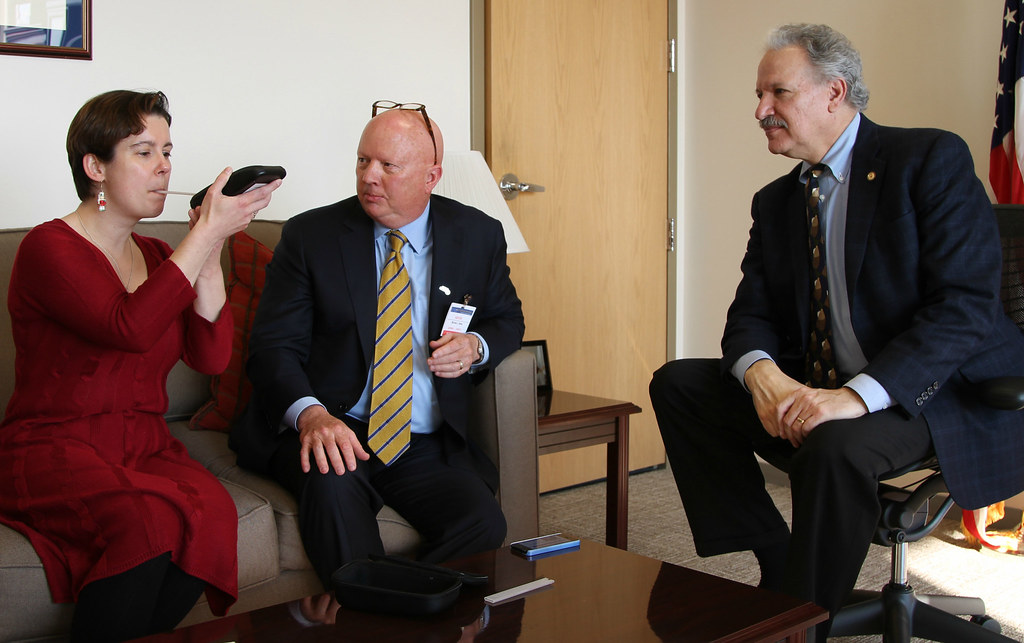
Oral Fluid Field Screening (OFFS) tests are reliable, fast, non-invasive, and able to detect recent (within 24 hours) drug use. These devices can be used at the roadside to identify the presence and category of drugs among impaired drivers.They have a short detection window which captures recent as opposed to historical drug use.
Their use requires reasonable suspicion or probable cause that a driver is impaired, typically following a standardized field sobriety test and other investigative procedures. The roadside screen is used along with other evidence to establish probable cause for arrest.
Roadside screening tests have been used statewide in Alabama, Indiana, Michigan and Utah. The National Highway Traffic Safety Administration (NHTSA) has approved the use of Federal funds in multiple states to implement oral fluid programs. Their use has grown exponentially in the past two years, with over 25 states now conducting testing to some degree.
Oral fluid can also be used as an evidential toxicology sample, depending on state statutes. In contrast, evidential oral fluid tests are analyzed in a toxicology lab similar to blood testing. The samples can be easily collected by law enforcement, they are gender neutral, and do not require medical personnel; they can be collected much earlier in the investigative process than blood. Alabama, New York, and Ohio have evidential oral fluid programs, and Louisiana is running pilot programs.
Expanded testing will strengthen DUI investigations and provide vital information to make appropriate sentencing, supervision, and treatment decisions. If drug use is not identified, the majority of these individuals are unlikely to be subject to drug testing or treatment interventions while under supervision which means that behavior change is unlikely and the potential for recidivism remains high.
The NASID Oral Fluid Working Group has created a host of resources that states can utilize when looking to implement a roadside oral fluid testing program. Oral Fluid Working Group
The National Sheriffs’ Association has passed an oral fluid resolution and the International Association of Chiefs of Police is also considering an oral fluid resolution in 2026.
Ocular Data Systems and Evidence Recorders allow law enforcement officers to manually test the eye movements and responses of a subject while directly observing and capturing responses in a ‘live’ video. The subject’s captured responses can be stored and played back as evidence of impairment or for instructor critique in training.
Continuous Alcohol Monitoring provides 24/7 transdermal alcohol testing for repeat impaired drivers. These systems automatically sample the offender’s perspiration every 30 minutes and encourage accountability and can increase compliance rates with court orders and community safety.
Continuous Alcohol Monitoring was developed by the University of Albany Institute for Traffic Safety Management and Research (ITSMR) to allow law enforcement officers to enter observations and assessments of impaired driving suspects into computer tablets. This electronic process allows data sorting, trend tracking, and informed enforcement efforts.
The DRE tablet app captures all the data required for a Drug Influence Evaluation, and more. The system includes an electronic version of a face sheet, validates data, generates PDF evaluation documents, and uploads all data, including drawings, to a state database. Since the evaluations contain sensitive personal information, data is fully encrypted, and security precautions are in place on both the tablet and the server.
Data collected from the application allows law enforcement agencies to plan their patrols around specific time frames and days of the week when multiple substance and drug-impaired driving violations are most prevalent.
Technology that would stop impaired and dangerous driving exists right now and legislation passed by Congress would move the technology from the research and development phase to future implementation. This technology is estimated to save over 10,000 lives each year.
In 2021, Congress passed the Honoring the Abbas Family Legacy to Terminate (HALT) Drunk Driving Act that directs the National Highway Traffic Safety Administration to create a rule requiring all new passenger vehicles have built-in technology to prevent drunk driving.
There are two primary types of technologies that hold promise:
Driver monitoring and driving performance monitoring systems can detect signs of distracted, impaired, or fatigued driving by monitoring the driver and/or recognizing erratic or reckless driving as measured by actions of the vehicle. For example, Volvo is adding sensors and cameras to its vehicles aimed at enhancing safety by monitoring drivers for signs of being drunk, impaired by drugs or distracted and intervening to prevent crashes.
Alcohol detection uses sensors to determine if a driver is at or above the legal blood alcohol concentration (BAC) limit of .08 and then prevents the vehicle from moving. These sensors are usually breath or touch-based to detect driver alcohol concentrations.
For more information, see our HALT Drunk Driving Law factsheet.